

The pursuit of material possessions blinds us to the genuine treasures that money can’t buy. These treasures, like the Earth’s natural beauty, are right in front of us, waiting to be appreciated.
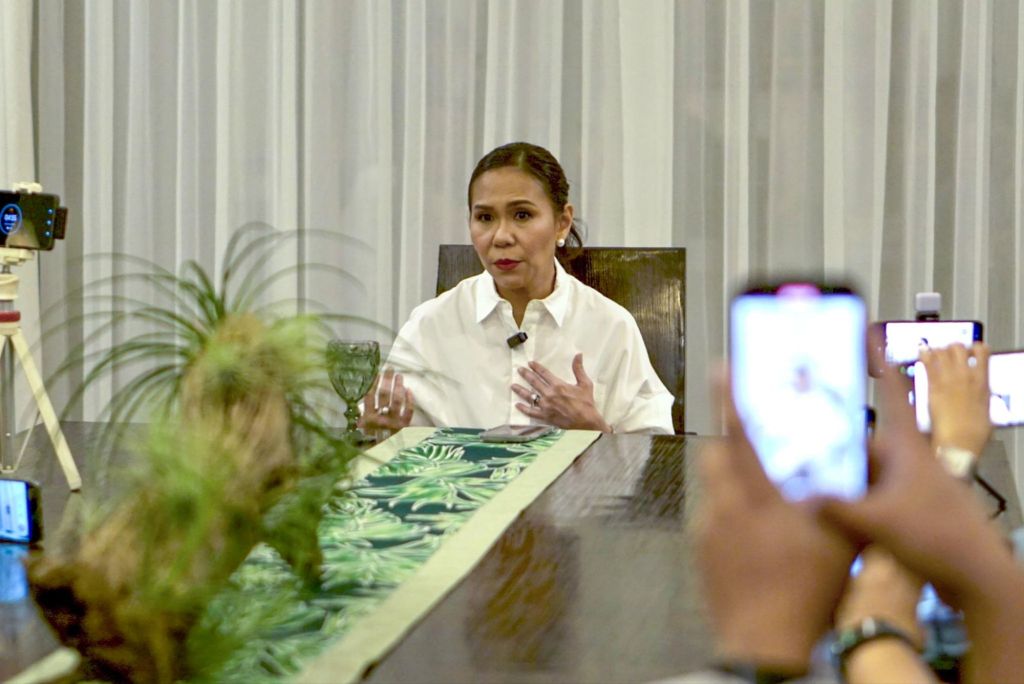
Whereas most people choose to immerse themselves in consumerist trends that harm the environment, Mary Rose Marbil aims to make a difference. In an interview with MEGA, the current adviser of the PNP OLC Foundation shares how she uses her platform not just to extend help to the PNP personnel and their families in need, but to push forward initiatives that empower communities to work together in preserving the world we live in.

Clean Slate
Before becoming a strong environmental advocate, Marbil already had a keen eye for beauty as an Interior Design major at the University of Santo Tomas. From Interior Design, she then went into sales—working her way up in the TELCO industry.
But in her heart, she knew she wanted to do something more meaningful. Her biggest wake-up call regarding the true state of the environment came from her personal experiences. In 2022 and 2024, her family’s home in Batangas was severely affected by Typhoons Paeng and Kristine, respectively.
“Our caretaker called and said our fence collapsed. You know why? It’s because all the trash from Taal Lake went there—it’s all plastic,” she shared. Following the calamity, they collected 50 to 100 sacks of plastic in their municipality alone—heavy enough to cause damage to the surroundings. The recent typhoon, Kristine, had a far worse effect, with much more water, trash, and debris on our property.
Shortly after Typhoon Paeng, Marbil again began to initiate small conservation efforts after the pandemic—promoting zero-plastic initiatives in her community by encouraging people to collect plastic waste in exchange for money. She also led tree-planting initiatives near Taal Lake and at Crater Island itself, planting close to 200 native trees like Narra and Talisay in hopes of renewing the surroundings.

Formula for Success
As the wife of the Chief PNP, she is automatically designated as the adviser of the PNP Officers’ Ladies Club—a group composed of the wives of PNP officials. She then transformed the organization into a foundation that solely helps PNP uniform and non-uniform personnel and their families, offering all kinds of assistance, from medical to financial aid. One of their latest efforts is a D.I.Y. soap-making/livelihood program, which was initiated in Cebu.
In the past, Marbil had already toyed with the idea of a start-up soap/cleaning aid business, collaborating with Kalikhasan—an eco-friendly line of organic soaps, shampoos, and house cleaning materials. Although she withdrew from the potential partnership, the experience was certainly valuable in the conceptualization of the OLC Foundation’s soap-making program.
The OLC Foundation started hosting workshops on how to make various types of liquid soaps—from hand wash to laundry detergents—using locally sourced raw materials. Marbil adds, “We all use soaps, and we keep buying the ones in plastic bottles or wasteful packaging, but the process of making it is very quick, even without the use of commercial machinery. You just mix the ingredients. It’s very easy to do; you can do it at home.”
For Marbil, the initiative offers hope for successfully lessening waste. “If it’s successful, we’ll expand to other regions. Because it can also be a source of livelihood for people. And, at the same time, environmentally, it’s good because they can start refilling stations.”
Living Clean
Wrapping things up, Marbil reiterated the impact of the environment on our well-being—both physical and mental. She hopes that for the sake of every living thing, people start to lessen the consumption of mass-produced products and start living clean. “We should be mindful. We shouldn’t be thinking of ourselves only, but the future generations also.”
“Everything around us is interconnected. We need to take care of our bodies, not just to look good. The same thing goes for the animals and trees. We build on their homes; I really feel we need to coexist accordingly,” she concluded.
From soap-making programs to zero-waste initiatives, Mary Rose Marbil shows that environmental advocacies are not just all talk; they can also change communities—showing a clear image of what the future of the environment can be.
 whereatmnl
Leave a comment